







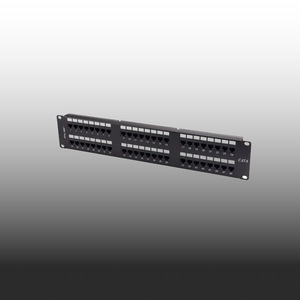




Most IT contractors and electricians understand power surge protection. They spec surge boards, install arrestors, protect panels. But ask them about Cat6 surge protection, and you'll often get a blank stare. This knowledge gap has cost Australian businesses tens of thousands in unplanned downtime and equipment replacement. This post explains why rack-mount Cat6 surge protection isn't optional—it's essential.
What Actually Happens When a Surge Travels Through Cat6 Cabling
Lightning, switching transients, or power faults can induce voltage spikes on network cabling. Cat6 cable doesn't discriminate—it carries data AND induced voltages. When a surge travels through Cat6 into network equipment:
· Switch Port Burnout: Gigabit Ethernet ports on switches have protection diodes rated for nominal voltages (typically 5V). A 1,000V surge (common in lightning strikes) vaporizes these diodes, destroying the port. The switch continues to function on other ports, but you've just lost one connection—and diagnostics won't show a clear fault.
· NIC Card Failure: Servers and firewalls connected to surge-damaged ports experience NIC (network interface card) failures. The component burns out completely, forcing replacement and requiring downtime to reimage/reconfigure.
· Data Corruption and Silent Packet Loss: Sometimes surges don't destroy components outright—they degrade them. This causes intermittent packet loss, CRC errors, and retransmissions. Users experience slow network speeds, timeouts, and database inconsistencies. Troubleshooting becomes a nightmare because nothing is fully broken.
· Cascading Failures: A single surge can propagate through daisy-chained switches. If you have a stack of three managed switches, one surge can potentially damage ports on all three, compounding the problem.
Data Line Surges vs. Power Line Surges: Why You Need Both
Most electricians protect against power line surges (affecting power distribution and equipment supply). But data line surges are separate, often independent, and equally destructive.
|
Characteristic |
Power Line Surge |
Data Line Surge |
|
Common Causes |
Lightning on mains, utility switching, load shedding |
Lightning on cabling, induction, cross-talk with nearby power lines |
|
Typical Voltage |
1,000–10,000V |
500–5,000V (often overlooked because lower) |
|
Affects |
Power supplies, motherboards, all downstream equipment |
Network ports, communication interfaces only |
|
Protection Type |
UPS, mains surge board, lightning arrestor |
Cat6 surge protector in rack |
The critical insight: a mains UPS protects against power surges but does nothing for surges induced on data cabling. You need rack-mount Cat6 surge protection as a separate layer of defence.
The Numbers: $800 Protector vs. $80,000 in Damages
Unprotected Scenario (Actual Case Study):
· Lightning strike induces surge on Cat6 runs to outdoor tower
· Core managed switch (24-port, $15,000) loses 6 ports, rendered unreliable
· Two servers with NIC card failures: 2 × $2,500 card replacement + 2 × 8 hours downtime = $5,000
· Unplanned network outages affecting 50 users for 6 hours: 300 person-hours of lost productivity ≈ $12,000
· Emergency engineer callout (after-hours): $1,500
· TOTAL COST: $33,500+ (and the switch still functions poorly)
Protected Scenario (with Novaris Cat6 Surge Protector):
· Same lightning strike occurs
· Novaris 16-port Cat6 surge protector (in rack): $805 installed
· Surge is clamped to safe levels before reaching switch
· No port damage, no NIC failures, no downtime
· TOTAL COST: $805 (one-time investment)
ROI: Avoided $32,695 in losses for an $805 investment. One incident pays for decades of protection.
Introducing Novaris: Australian-Designed Cat6 Surge Protection
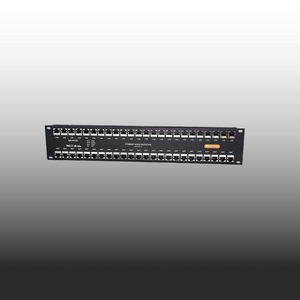
Novaris is an Australian company that designed rack-mount Cat6 surge protectors specifically for data centre and network infrastructure deployments. Unlike plug-and-play surge protectors designed for office use, Novaris units are engineered for continuous operation in rack environments.
Key Features:
· Rack-mount form factor (1U): Installs seamlessly in standard server racks
· Modular protection: 8-port, 16-port, and 24-port configurations
· Low insertion loss: <0.5dB @ 1GHz (maintains full Cat6 performance)
· Fast clamping: Response time <1ns (faster than competitor products)
· Australian design: Built to withstand Australian climate conditions
· Standards-compliant: Meets AS/NZS 1768 (Australian surge protection standard)
· Hot-pluggable modules: Replace damaged ports without rack downtime
Novaris Product Range
|
Model |
Ports |
Form Factor |
Ideal For |
|
8 |
1U rack mount |
Small deployments, secondary protection |
|
|
16 |
1U rack mount |
Standard data centre and network hubs (most popular) |
|
|
24 |
1U rack mount |
High-density switches, core infrastructure |
How to Implement Cat6 Surge Protection in Your Racks
1. Assess Risk Level: Is your site in a lightning-prone area? Near utility switchgear? Exposed outdoor cabling? High-risk sites need protection.
2. Choose Port Count: Match the Novaris module to your largest switch or your total external Cat6 runs. For a 24-port core switch with external connectivity, the 24-port Novaris makes sense.
3. Install Above the Switch: Mount the Novaris protector in the rack position immediately above the protected switch. This minimizes cabling distance and reduces inductive coupling.
4. Patch Through: Run Cat6 from your external (or exposed) cabling into the Novaris module. Patch out from the Novaris to your switch. It's transparent to network performance.
5. Label Clearly: Mark which Novaris ports protect which external lines. Maintenance teams need to know the configuration.
The Bottom Line
Most contractors don't specify Cat6 surge protection because they don't know it exists. This is a market gap. Your clients expect network infrastructure to be protected. Mains surge protection is step one; rack-mount Cat6 surge protection is step two. An $800 Novaris module installed today can save $80,000+ in equipment and downtime. It's the most cost-effective insurance policy you can specify.
Ready to Upgrade Your Infrastructure?
Explore SparkyZone's full range of compliance-grade networking and electrical infrastructure. Contact our team for custom specifications and competitive pricing.
Visit sparkyzone.com.au
